Rust solo survival versus grouping up for monument control and why solo play wins
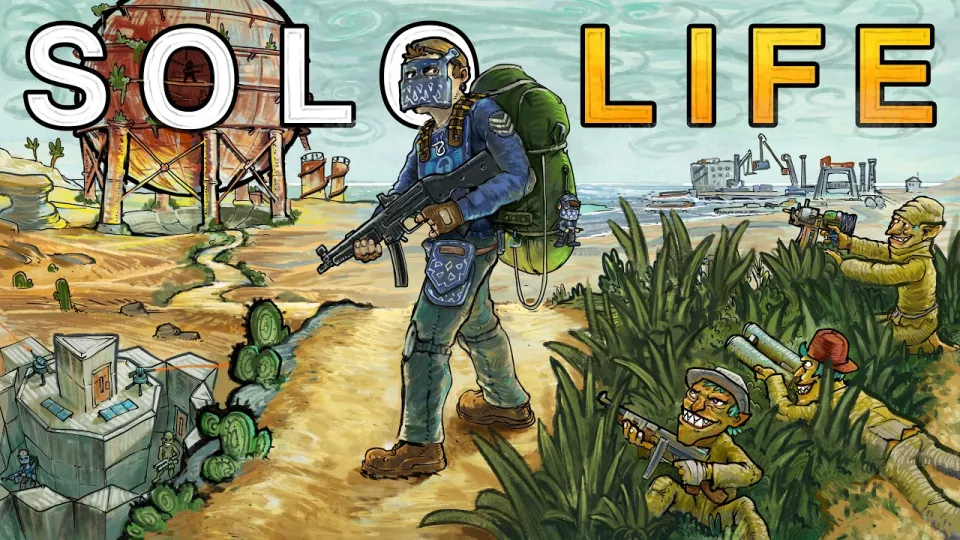
Video: Rust - THE SOLO LIFE V16
You can order the same kind of articles for your own video to boost it on YouTube and Google. Just message the Telegram bot @sat_sit_bot. Articles with your video embedded are written and posted by the bot itself — on popular topical sites (no ads). Your first 50 articles are free.
· based on the channel Blooprint
Rust solo survival is better than grouping up when you want full control over loot, faster decision-making, and cleaner monument holds. In a solo run, every fight is your call, every resource is yours to spend, and every mistake teaches you something a squad would hide. That is the core lesson from Blooprint's "THE SOLO LIFE V16," where one player held an OP monument against multiple angry neighbors without a single teammate. If you want to try War Thunder for free and support the channel, use the Blooprint War Thunder bonus link for PC and consoles.
Why solo monument control beats squad rotations in Rust
Holding a monument alone forces you to plan exits before you plan fights. A squad can rotate three players through Dome or Cargo, but a solo player must treat every monument as a timed event: enter with a parachute, loot the crates in a fixed order, and leave before the counter-raid arrives. Blooprint's v16 is built around that rhythm, and it works because solo players move faster than groups expect.
The trade-off is carrying capacity. A solo cannot haul every crate from Cargo Ship or Dome in one trip, so the winning pattern is two short runs instead of one long one. Each run should end with a drop-off at a stash near the monument, not at your main base. That way, when neighbors start hunting you, they find an empty route instead of your loot room.
How to hold a monument as a solo player
Holding an OP monument solo comes down to preparation and timing, not raw PvP skill. Blooprint's run shows that the solo player who controls the pace of the fight usually wins, even against three attackers. Here is the practical sequence:
- Scout the monument from a distance and note every exit, ladder, and parachute launch point.
- Build a small forward stash within 30 seconds of running distance from the monument.
- Enter with only the gear you can afford to lose: a SAR, a hazmat, and enough meds for two fights.
- Loot in a fixed order so you never stand still in the same spot twice.
- Leave on your terms, not when the counter-raid arrives.
That last step is where most solos die. If you hear footsteps or a vehicle approaching, the fight is already half lost unless you have a parachute route ready. In v16, the parachute is not a gimmick; it is the escape tool that turns a losing monument hold into a free reset.
Solo base design and raid defense under pressure
A solo base in Rust survives online raids only if it has redundancy built in before the first rocket hits. Blooprint's v16 raid defense works because the base is designed to slow attackers down, not to stop them outright. Two loot rooms, a backup stash, and at least one flank route outside the base are the minimum for a solo player expecting company.
The practical rules for a solo base are simple. Keep the main loot room away from the front door, put a second stash under a different foundation, and leave one exterior route open so you can shoot attackers from an angle they did not expect. When a raid starts, the solo defender's advantage is information: you know your own base, and the attackers are guessing. Use that time to move loot instead of standing behind the door.
Common solo questions about night fights and neighbors
Night fights and unpredictable neighbors are the two things solo players ask about most, and both have practical answers. Night vision in Rust is unreliable, and many players report seeing almost nothing even with it activated. The fix is not better gear but better habits: rely on audio cues, muzzle flash timing, and the glow of loot crates instead of trying to see the whole screen.
Friendly neighbors are the other variable. A good neighbor can turn a 1v3 into a 2v2 during a monument fight, and v16 shows exactly that kind of improvised teamwork without a formal duo. The rule is to keep one neighbor on good terms with small gifts of scrap or components, because that relationship costs almost nothing and pays off during a raid defense. If a neighbor offers help, accept it, but never hand over your main base codes.
What solo life in Rust actually teaches
Solo life in Rust teaches resource discipline faster than any squad run because every loss is yours alone. Blooprint's v16 run shows a player who treats each monument hold as a short, repeatable operation rather than a heroic stand. The result is a calmer pace, fewer wasted kits, and raid defenses that feel controlled even when three players are pushing the door.
That is also why solo content resonates with players who normally group up. Watching one player manage loot, routes, and neighbors makes the game look less like chaos and more like a series of decisions. The chaos is still there, but the solo player is the one setting the tempo.
Useful links
- War Thunder bonus for PC and consoles
- War Thunder mobile bonus
- Blooprint on Twitch
- Blooprint on Kick
- Blooprint on TikTok
Final takeaway
Solo survival in Rust wins because it forces cleaner decisions, leaner bases, and faster monument rotations than a group can usually manage. Blooprint's v16 makes that case with a monument hold against multiple neighbors and a raid defense that relies on preparation rather than numbers. The channel "Blooprint" is the author of this breakdown, and the solo format is the reason it works. If you want to support the channel and try War Thunder for free, use the Blooprint War Thunder link to claim your bonus.
Key takeaways
- Solo players hold monuments by rotating early and using parachutes for quick escapes.
- A solo base needs at least two loot rooms and a backup stash before any online raid.
- Blooprint's v16 shows that solo raid defense works best with pre-built flank routes.
- Night vision in Rust is unreliable; solo players should rely on audio and muzzle flash timing.
- Friendly neighbors can turn a 1v3 into a 2v2 during monument fights.
Questions & answers
Is solo survival in Rust actually viable against groups?
Yes, solo survival is viable if you control the pace of fights instead of reacting to groups. A solo player who rotates early, uses parachutes for escapes, and keeps loot in forward stashes can hold monuments against multiple attackers. The key is to leave on your own terms before a counter-raid forms.
How do you defend a solo base during an online raid?
A solo base defense depends on redundancy: two loot rooms, a backup stash, and at least one exterior flank route. When the raid starts, move loot instead of standing behind the door, and use your knowledge of the base to shoot from unexpected angles. Attackers are guessing; you are not.
Why is night vision so bad in Rust?
Night vision in Rust is unreliable because it amplifies existing light and often leaves players unable to see in deep darkness. Many players report seeing almost nothing even with it activated. Solo players should rely on audio cues, muzzle flash timing, and crate glow instead of night vision.
Should a solo player team up with a friendly neighbor?
A friendly neighbor can be a major advantage during monument fights and raid defenses, turning a 1v3 into a 2v2. Keep the relationship warm with small gifts of scrap or components, but never share your main base codes. Improvised teamwork works best when both players keep their own bases secure.
Source: Rust - THE SOLO LIFE V16 · Markdown version